
“The cure for anything is salt water: sweat, tears, or the sea.”
– Isak Dinesen.
If only it were that simple. In the world of modern medicine, the cure usually costs billions.
Part 1: The High Price of FDA Drug Approval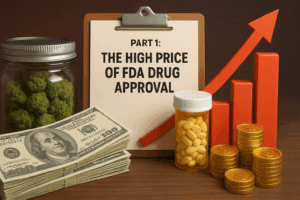
When people imagine drug development, they picture scientists in white coats discovering a miracle compound and quickly bringing it to patients. The truth is more brutal. On average, it takes 10–15 years and as much as $2.6 billion to move a new drug from lab bench to bedside.
The reasons are straightforward but sobering:
Preclinical hurdles swallow millions before a human ever swallows a pill. Dozens of compounds are tested, but only a handful make it far enough to justify human trials.
Clinical trials — Phases I through III — demand vast patient groups, long timelines, and meticulous monitoring. Failures at any stage send years of work and millions of dollars up in smoke. Roughly nine out of ten drug candidates fail, leaving investors to absorb the loss.
Regulatory review by the FDA is rigorous and slow. Even the application fees alone cost millions, while approval often stretches out for years.
This gauntlet ensures safety and efficacy, but it also creates a simple economic truth: only companies with very deep pockets can make it to the finish line.
The bar to entry is so high that many smaller innovators never even get to try.
Part 2: Cannabis as a Special Case
Cannabis has been studied, consumed, and debated for decades. If it moves to Schedule III, the FDA pathway opens for cannabis-derived medicines. But entry into that pathway is not cheap, and rescheduling does not magically erase the high costs of the process.
The Epidiolex Case Study
In 2018, Epidiolex became the first FDA-approved cannabis-derived medicine, targeting rare childhood epilepsies. Its approval was historic — but also revealing:
GW Pharmaceuticals didn’t start from zero. Years of research and anecdotal use gave CBD a head start and shaped where the company placed its bets.
Yet, the company still invested hundreds of millions into rigorous clinical trials across multiple countries, employing an army of researchers and statisticians to satisfy FDA standards.
The outcome was not “medical cannabis” as dispensaries sell it, but a highly-specific, patented formulation available only by prescription and tied to narrowly defined conditions.
Epidiolex demonstrated two truths at once: cannabis compounds can indeed pass through the FDA’s gold-standard approval system, and doing so requires capital on a scale out of reach for most cannabis businesses.
Conclusion: Market Opportunity and Disparity
If cannabis moves to Schedule III, it will be hailed as a long-overdue shift in federal policy. But beneath the celebration lies a paradox: rescheduling opens the door for big pharma while simultaneously raising barriers for the smaller cannabis companies that pioneered medical access in the first place.
And the questions multiply:
- What does this mean for cannabis dispensaries in medical-only states?
- Will they be required to staff each store with a PharmD to dispense FDA-approved cannabis medicines?
This is just the beginning of the story. More to explore in the next part of this series: “What Cannabis Rescheduling Could Mean, Part 2: Rescheduling Doesn’t Equal Legalization.” Stay Tuned!