Key Points (as of July 2025)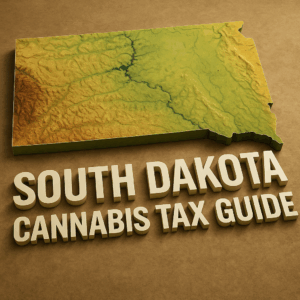
South Dakota operates only a medical‑cannabis program. Multiple attempts to legalize recreational (adult‑use) cannabis have failed—voters rejected the 2024 initiative, marking the third defeat in four years after the 2020 amendment was struck down by the courts and a 2022 ballot again failed.
As of July 2025, only medical cannabis sales are permitted; no recreational program or associated excise tax is in effect.
Understanding South Dakota’s Cannabis Tax Structure
-
No State Income Tax (and thus no 280E decoupling): South Dakota levies neither personal nor corporate income tax, so cannabis businesses do not face state‑level 280E conformity issues.
-
No Cannabis‑Specific Excise Tax in Practice: Although the 2020 constitutional amendment would have imposed a 15% excise tax on adult‑use flower and trim, the absence of a legal recreational market means no excise tax is collected.
-
Sales & Use Tax for All Cannabis Sales: Medical cannabis transactions are treated like any other retail sale and are subject to state and local sales taxes.
-
Medical Sales Receive No Exemption: Registered patients pay the same combined sales‑tax rates as non‑medical purchasers.
Cannabis Excise Tax: What Retailers Need to Know
-
2025 Rate: N/A (no active adult‑use program).
-
Uniformity: Not applicable until recreational sales launch.
-
Who Pays: No licensees pay a cannabis‑specific excise tax.
-
Medical Sales: No excise component; only sales tax applies.
Sales & Gross Receipts Tax: Local Impact on Cannabis Sales
-
State Base Rate: 4.2%
-
Municipal Add‑Ons: Cities may impose a general sales tax of up to 2% (plus an optional 1% gross‑receipts tax on a few specialized goods, though not typically applied to cannabis).
-
2025 Rate Examples:
-
Sioux Falls: 4.2% + 2.0% = 6.2%
-
Rapid City: 4.2% + 2.0% = 6.2%
-
Pierre: 4.2% + 2.0% = 6.2%
-
-
Calculation: Tax applies to the total retail price, including any local add‑ons.
-
Medical Sales: No deductions or exemptions; full state and local rates apply.
Filing and Payment Deadlines
-
Filing Frequency: Set by the Department of Revenue based on gross receipts (monthly for high‑volume sellers; quarterly or semi‑annual for smaller businesses).
-
Required Form: SD Sales & Use Tax Return (Form ST‑1).
-
E‑Filing: Mandatory via the South Dakota Department of Revenue’s Online Services.
-
Zero‑Sales Filings: Required even when no taxable sales occur.
-
Penalties: 1.5% of unpaid tax per month late; repeated noncompliance can trigger fines or license suspension.
How to Calculate Your Total Cannabis Tax Obligation
-
Identify your location’s combined state (4.2%) and local rate (up to 2%).
-
Multiply the retail sale price by that combined rate.
-
No excise tax calculation is necessary.
Key State Cannabis Trade Associations
-
Cannabis Industry Association of South Dakota: Statewide advocacy and education for medical‑program stakeholders.
- Minority Cannabis Business Association: social equity, advocacy, and education
-
National Cannabis Industry Association: Connects local businesses with national policy updates.
Government Contact List
-
Dakota Department of Health – South Dakota Medical Cannabis Program
Phone: (605) 773‑3361
Address: Robert Hayes Building
600 E. Capitol Ave, Pierre, SD 57501
Email: DOH.Info@state.sd.us
Contact Directory Listing - South Dakota Department of Revenue – Sales and Use Tax
Administers: Sales & Use TaxSD DOR FormsSales and Use Tax Local rate lookup tool - Department of Public Safety – Controlled Substances Division
Compliance & Enforcement inquiries
South Dakota Cannabis Taxes Financial Calendar
| Tax Type | Rate/Details | Applies To | Filing Frequency | Due Date |
|---|---|---|---|---|
| Cannabis Excise Tax | None | — | — | — |
| Sales & Use Tax | 4.2% + local add‑ons | All retail cannabis | Monthly/Quarterly/Semi‑ | Varies by cycle |
| State Income Tax | N/A (no income tax) | — | — | — |
| Medical Cannabis Exemption | None (taxed like other goods) | Medical cannabis | Matches sales tax cycle | Matches sales tax cycle |
Note: This calendar is current as of July 2025. Always verify deadlines and rates with the South Dakota Department of Revenue. For professional advice, consult a qualified CPA, attorney, or compliance specialist.