Updated as of July 1, 2025
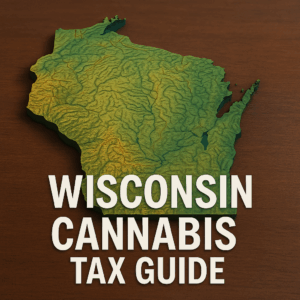 Legal Status as of July 2025
Cannabis remains illegal in Wisconsin for both adult-use and medical purposes.
The tax framework detailed below is based on Governor Tony Evers’s 2025 budget proposal, which sought to legalize cannabis and introduce a regulatory and tax structure. As of July 2025, this proposal has not passed into law. All information below should be treated as hypothetical and subject to change pending legislative approval.
Key Points for Wisconsin Cannabis Retailers (Proposed Framework)
-
A statewide excise tax would apply to adult-use (recreational) cannabis sales, with additional local sales taxes including city and county add-ons.
-
Medical cannabis products would be exempt from excise and state sales taxes if sold to authorized registry members, with strict documentation required.
-
Taxes would be assessed based on licensee type and location. Local rates could change annually.
-
Businesses would need to file and pay taxes on time to avoid penalties, license suspension, or audit.
-
Full compliance with reporting and deadlines would be essential to remain in good standing.
Understanding Wisconsin’s Proposed Cannabis Tax Structure
280E Conformity in Wisconsin
Wisconsin’s current budget proposal does not decouple from federal IRC §280E. This means that cannabis businesses, if legalized, would remain subject to federal tax restrictions—disallowing most business deductions except cost of goods sold. If Wisconsin were to decouple, businesses could benefit by:
-
Deducting ordinary business expenses from state income taxes
-
Improving cash flow and increasing after-tax profits
-
Encouraging reinvestment and growth
-
Reducing effective state tax rates and simplifying compliance
Federal 280E restrictions would still apply at the federal level.
Proposed Cannabis Tax System for Wisconsin
Excise Tax (Proposed):
-
15% wholesale excise tax on transfers to retailers
-
10% retail excise tax on adult-use (recreational) sales
-
Exemptions for medical cannabis sales to registered patients
Sales/Gross Receipts Tax (Proposed):
-
5.0% state sales tax on recreational cannabis
-
Medical sales would be exempt with proper documentation
-
Counties may add 0.5% to 0.9% (e.g., Milwaukee County adds 0.9%)
-
Certain cities may also apply a local add-on tax
Example Local Rates (2025 Estimates):
-
Milwaukee: 5.0% state + 0.9% county + city tax ≈ 5.9%–6.3%
-
Racine: 5.0% state + 0.5% county = 5.5%
-
Madison (Dane County): 5.0% state + 0.5% county = 5.5%
Tax Calculation Rules (If Legalized)
-
Excise tax would be based on the sale price (wholesale or retail), excluding sales tax
-
Sales tax would be calculated on the total retail price, including excise tax
-
Medical sales would not be subject to sales or excise taxes if the patient is properly registered and documented
Filing and Payment Deadlines (Proposed)
-
Excise Tax: Due monthly by the 15th of the following month (e-file)
-
Sales/Use Tax: Due monthly or quarterly (per DOR approval) by the 20th
-
Medical Exemption: Submit registry documentation with returns
-
Zero Sales: Businesses would still need to file even with no sales
-
Quarterly filing could be permitted for businesses with low tax liability
Penalties and Compliance Risks
-
Late filings may incur interest and penalties
-
Failure to comply could result in suspension or loss of license
-
Inconsistent filings or documentation errors may trigger audits
How to Calculate Total Cannabis Tax Obligation (Hypothetical)
-
Identify your local and state tax rates
-
Calculate excise tax:
-
15% on wholesale transfers
-
10% on adult-use retail sales
-
-
Add state and local sales tax to the retail price
-
Confirm registry certification for medical sales to apply exemptions
Key Cannabis Trade Associations
-
Minority Cannabis Business Association (MCBA) – Advocacy for equity and inclusion in the cannabis industry
-
Midwest Hemp Council – Regional support for hemp and cannabis
-
National Cannabis Industry Association (NCIA) – National network, events, and compliance resources
Wisconsin Government Contacts
Wisconsin Department of Revenue (DOR)
- Administers excise and sales/use taxes (if cannabis becomes legal)
-
General inquiries: To be determined upon legalization
-
Compliance issues: To be determined upon legalization
-
Licensing bureau: To be determined upon legalization
Wisconsin Cannabis Tax Calendar
As of July 2025, Wisconsin has neither legalized recreational cannabis nor established a full‐scale medical program. The only taxes that would apply are the general state sales tax (with local add‑ons) and state income‑tax conformity to federal IRC §280E. Proposals for a 10% retail / 15% wholesale cannabis excise tax remain pending and are not yet law.
| Tax Type | Rate / Details | Applies To | Filing Frequency | Due Date |
|---|---|---|---|---|
| Sales Tax | 5% state + up to 0.5–2% local add‑ons | All taxable goods (no cannabis‑specific carve‑out) | Monthly or Quarterly (based on volume) | 20th of each filing period |
| State Income Tax | Conforms to IRC §280E (no deduction of ordinary expenses for Schedule I activities) | Cannabis‑related businesses (if/when legal) | Annual | April 15 |
| Excise Tax (Proposed) | 10% retail; 15% wholesale (not yet enacted) | Retailers & distributors | — | — |
| Medical Exemption | No statewide medical program beyond low‑THC CBD oil; no exemption available | Registered patients | — | — |
Disclaimer:
This guide is for informational purposes only. Cannabis remains illegal in Wisconsin as of July 2025. The information presented reflects a proposed tax system that has not been enacted into law. Always consult a qualified tax or legal professional before making business, tax, or compliance decisions.