 Key Points
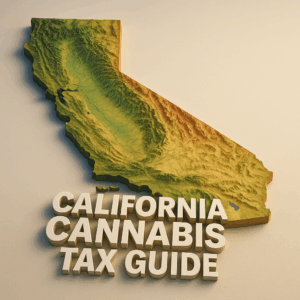
- California is decoupled from 280E, allowing state tax returns to take the same deductions as any other industry business.
-
California cannabis retailers face a statewide excise tax and location-specific sales or gross receipts taxes (GRT/Sales Tax).
-
Excise tax rates and local taxes vary; the statewide excise tax increases to 19% on July 1, 2025, with additional local taxes in many jurisdictions.
-
Medical cannabis may be exempt from certain taxes with proper documentation — strict reporting is required.
-
Timely, accurate filings are mandatory; noncompliance can result in severe penalties and license risks.
Understanding California’s Cannabis Tax Structure
California imposes a statewide cannabis excise tax on all retail sales of cannabis and cannabis products, calculated as a percentage of gross receipts.
Retailers must also collect state and local sales taxes and may be subject to local cannabis business taxes set by cities or counties.
Medical cannabis sales to qualified patients with MMIC are exempt from state sales tax but not from the excise tax.
California is decoupled from federal IRC 280E for state income tax purposes, so licensed cannabis businesses can deduct ordinary business expenses on their state income tax returns.
Cannabis Excise Tax: What Retailers Need to Know
-
2025 Rate: 19% of gross receipts from retail sales, effective July 1, 2025 (up from 15%).
-
Uniformity: The 19% excise tax is statewide; localities cannot alter this rate but may impose additional business taxes.
-
Who Pays: All licensed cannabis retailers, delivery services and microbusinesses with retail privileges must collect and remit this tax.
-
Medical Sales: No exemption from the excise tax for medical cannabis; all retail sales are subject to the 19% excise tax, regardless of patient status.
Sales/Gross Receipts Tax: Local Impact on Cannabis Sales
-
State Base Rate: 7.25% state sales tax, but the effective rate in most major cities is higher due to local add-ons.
-
City/County Add-Ons: Many cities and counties impose additional sales or cannabis business taxes.
2025 City Rate Examples
| Location | Local Cannabis Tax Rate 2025 |
|---|---|
| Los Angeles | 10% |
| San Diego | 10% |
| San Jose | 10% |
| San Francisco | 2.5%–5% |
| Weed, CA | 0.25% (city sales tax) |
-
Calculation: Sales tax is charged on the total price, which includes the product price, delivery fees, service charges, and the cannabis excise tax. Local cannabis business taxes are also subject to sales tax.
-
Medical Sales: State sales tax exemption applies for qualified medical cannabis patients with a valid Medical Marijuana Identification Card (MMIC). Local taxes may still apply unless the locality provides an exemption.
Medical Cannabis: Tax Exemptions and Requirements
-
Excise Tax: No exemption—medical cannabis is subject to the 19% excise tax.
-
Sales/GRT: State sales tax exemption for medical cannabis sales to patients with a valid MMIC. Retailers must maintain proper documentation for each exempt sale.
-
Documentation: Retailers must keep copies of MMICs and detailed records to substantiate all exempt transactions for audit purposes.
Filing and Payment Deadlines
-
Filing Frequency: Most cannabis taxes are filed monthly; some retailers may qualify for quarterly filing based on CDTFA criteria.
-
Required Forms: Returns must be filed using the Cannabis Retailer Excise Tax Return and relevant sales tax returns.
-
E-Filing: Required through the CDTFA online portal.
-
Zero Sales: Filings are required even if no sales occurred during the period.
-
Quarterly Option: Available for eligible retailers; check with CDTFA for qualification.
Penalties and Compliance Risks
-
Late Filing: Penalties include a 10% general penalty plus a 50% penalty on the unpaid tax, plus interest.
-
Noncompliance: Failure to pay or file can result in state tax liens, license suspension or revocation, and additional collection actions.
-
Audit Risk: Cannabis businesses are subject to frequent audits; incomplete or inaccurate records increase risk.
How to Calculate Your Total Cannabis Tax Obligation
-
Determine Your Location’s Tax Rate:
-
Find your city/county’s local cannabis business tax and sales tax rates using the CDTFA’s online lookup tool or local government resources.
-
-
Calculate Excise Tax:
-
Multiply the gross receipts (including delivery and service fees) by 19%.
-
-
Add Sales/GRT:
-
Calculate sales tax on the sum of the product price, excise tax, and any taxable fees. Add any local cannabis business tax as required.
-
-
Medical Sales:
-
Deduct state sales tax for qualified medical sales with valid MMIC documentation; excise and local taxes may still apply.
-
Key State Cannabis Trade Associations to Be a Part Of
-
-
The largest and oldest statewide trade group, advocating for regulatory, economic, and social equity policies.
-
-
Americans for Safe Access (ASA)
-
Focuses on patient rights, access, and regulatory advocacy.
-
- California Cannabis Operators Association
- Provides legal updates, consumer advocacy, and policy reform efforts.
- National Cannabis Industry Association (NCIA)
- Advocacy, education, access.
Government Contact List
California Department of Cannabis Control (DCC)
-
Main Phone: 1-844-61-CA-DCC (1-844-612-2322)
-
Physical Address: P.O. Box 419106, Rancho Cordova, CA 95741-9106
-
General Questions: info@cannabis.ca.gov
- Licensing: licensing@cannabis.ca.gov
- Compliance: Compliance@cannabis.ca.gov
-
Complaints: info@cannabis.ca.gov
- Track and Trace: trackandtrace@cannabis.ca.gov
California Department of Tax and Fee Administration (CDTFA)
-
Administers: Cannabis excise tax, sales/use tax
California Cannabis Taxes Financial Calendar
| Tax Type | Rate/Details | Applies To | Filing Frequency | Due Date |
|---|---|---|---|---|
| Cannabis Excise Tax | 19% of gross receipts | Retailers | Monthly/Quarterly | Last day of month/quarter |
| Sales/GRT Tax | 7.25% state + local add-ons | Retailers | Monthly/Quarterly | Last day of month/quarter |
| State Income Tax | 280E does not apply; ordinary business deductions allowed | All cannabis businesses | Annually | April 15, 2026 |
| Medical Exemption | State sales tax exemption with valid MMIC | Retailers (qualified sales) | Monthly/Quarterly | With regular filings |
-
Special Filing Instructions: All cannabis tax returns must be filed online via CDTFA. Filings are required even for zero sales. Quarterly filing is only available to eligible retailers; verify eligibility with CDTFA.
-
Note: This calendar is current as of July 2025. Always check with the IRS and CDTFA for the latest updates, especially if affected by disasters or special circumstances.
This guide is for informational purposes only. Always seek advice from a qualified tax or legal professional before making business, tax, or compliance decisions.